
Corporate Taxes
In Spanish
Small Business, Partnerships, and LLC Taxes in Spanish
We Handle All Corporate Tax Forms
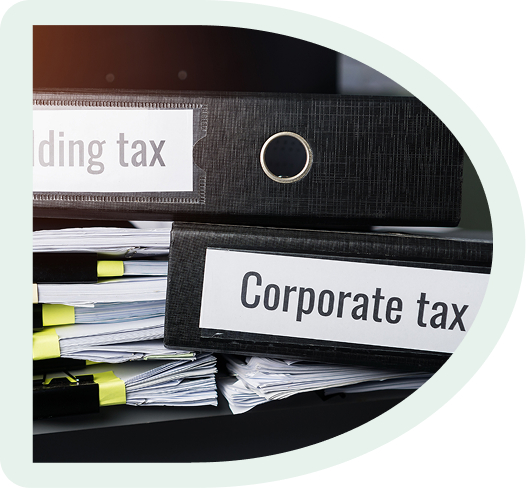

What are corporate taxes?
Corporate taxes are taxes applied to businesses and legal entities on their net income, meaning income minus deductible expenses. Depending on the business structure, forms such as Form 1120 for C corporations, Form 1120-S for S corporations, and Form 1065 for partnerships may be involved. The IRS also offers specific resources for businesses and business tax accounts.
What does our service include?
- Business Tax Structure Review
- Business Tax Preparation and Filing
- Business Consulting
- Business Formation and Registration
- Review of Income, Expenses, and Deductions
- Accounting Organization and Documentation Support
- Bookkeeping and Financial Statements
- Tax Savings Strategy
- Post-Filing Monitoring and Guidance
Comprehensive Business Tax Services
We offer comprehensive business tax services to help you comply with the IRS, reduce costly errors, and improve your business’s financial health.
Business Tax Preparation
We prepare your business tax return based on your company’s legal structure, income, expenses, and financial documentation. Our approach combines compliance, accuracy, and strategic vision.
Monthly Bookkeeping
We keep your accounting up-to-date so that your taxes don’t become a problem at year-end. Good bookkeeping allows you to report more accurately, identify deductible expenses, and make better decisions.
Filing for Partnerships, S-Corps, C-Corps, and LLCs
We guide you through the preparation and filing of business forms such as:
- Form 1120
- Form 1120-S
- Form 1065
IRS Representation and Support
If you have received letters, notices, or need to respond to requests, we help you organize the information and manage the process with greater confidence. The IRS also offers mechanisms to access notices, letters, and records from the business tax account for certain entity types.
Tax Reduction Strategies
We don’t just fill out forms. We evaluate opportunities to improve your tax structure, better organize your expenses, and prepare you in advance for the next tax cycle.
Balance Sheet
We organize and analyze your balance sheet to provide a clear view of assets, liabilities, and equity, which is key for more professional management.
Payroll Taxes
If you have employees, we help you understand and comply with payroll tax obligations. The IRS itself indicates that the business tax account is used, among other cases, for filings such as Form 941 related to payroll taxes.
Business Deductions
We identify legitimate deductible expenses to help you reduce your tax burden within legal boundaries. This section is very important for small business owners who feel they are paying too much.
Audits and Preventive Review
We conduct reviews to detect inconsistencies before they become major problems. Prevention is an essential part of a healthy tax strategy.
Annual Tax Planning
We design a planning strategy so you don’t arrive at tax season improvising. This helps you project payments, avoid surprises, and make decisions with financial foresight.
Business Financial Advisory
We connect taxes with the actual operation of the business to help you make better decisions about expenses, growth, structure, and profitability.
Profit & Loss (P&L)
We prepare and review your profit and loss statement to understand your business’s true performance and support your tax declaration.
Other Important Business Forms
- Form 941 → payroll
- Form 940 → unemployment
- Form 1099-NEC → contractors
- Form 2553 → S-Corp election
- Form 8832 → LLC classification
These forms are directly associated by the IRS with different types of business entities.
Sales Tax and Estimated Taxes
We advise you on sales taxes when they apply to your operation and on estimated payments to avoid delays, interest, or cash flow imbalances.
Signs Your Business Needs Professional Tax Help
- You are paying more taxes than expected
- You are unsure which expenses you can deduct
- You mix personal and business finances
- You don't keep up-to-date bookkeeping
- You received letters or notices from the IRS
- Your company is growing and needs more control
- You don't know if your current structure is still the most suitable

Who Is This Service For?
This service is designed for:
LLC
We help businesses structured as LLCs to correctly fulfill their tax obligations according to their applicable tax treatment.
S-Corp
We prepare and organize tax filings for S corporations, ensuring compliance and proper documentation of income, deductions, and distributions.
C-Corp
We work with corporations subject to Form 1120 to structure the declaration accurately and strategically. The IRS expressly identifies Form 1120 as the reference form for C corporations.
Partnerships
We support partnerships in preparing their Form 1065 and organizing financial and operational information. The IRS also links business tax accounts with entities that file Form 1065.
Small Businesses and Growing Companies
If you’re invoicing more, hiring staff, or looking to organize your finances, this service helps you move from improvisation to financial control.
Do you also need personal taxes?
If, in addition to managing a business, you need to file your personal taxes, we also offer services for employees, freelancers, individuals with W-2, 1099, and ITIN.
Benefits of Working with Professionals for Your Business Taxes
Less Risk of Errors
A poorly prepared declaration can lead to delays, adjustments, IRS letters, or unnecessary payments.
More Financial Control
When your accounting and taxes are organized, you better understand how much you earn, how much you spend, and how much you can reinvest.
Better Tax Optimization
Identifying deductions and planning payments helps you retain more capital within the business.
More Time to Operate and Grow
Delegating this area allows you to focus on sales, operations, and business development.
IRS Compliance
The goal is not just to pay less, but to do it correctly and with support. The IRS has specific resources for businesses, forms, accounts, and business obligations.
How Our Process Works
Business Assessment
We analyze your company’s structure, income, expenses, and current tax obligations.
Financial and Accounting Review
We organize key business information, reviewing financial statements, transactions, and necessary documents.
Tax Strategy
We identify deductions, savings opportunities, and potential adjustments to optimize your tax outcome.
Preparation and Filing
We prepare and file the corresponding declaration based on the entity type and applicable regulations.
Follow-up and Support
We support you after filing to answer questions, respond to notices, and better plan for the next fiscal year.
Key Business Forms for Corporate Taxes
Success in your LLC taxes largely depends on correctly using the tax forms required by the Internal Revenue Service (IRS).
Each business type has specific obligations, and choosing the correct form is essential to avoid errors, penalties, or unnecessary payments.
Form 1065 - Partnerships and Multi-Member LLCs
Form 1065 is used when an LLC has more than one owner and is taxed as a partnership.
This form allows reporting of:
- Business income
- Deductible expenses
- Gains or losses
Additionally, each partner receives a document called Schedule K-1, which details their share of the income for multi-member LLCs, family businesses, and partnerships.
Form 1120 - Corporations (C-Corp)
Form 1120 is the form used by businesses taxed as traditional corporations (C-Corp).
Unlike a standard LLC:
- The company pays taxes directly
- Double taxation may occur (company + owner)
Ideal for larger companies, businesses with constant reinvestment, and complex corporate structures.
Form 1120-S - S-Corp Election
Form 1120-S is used when an LLC or corporation elects to be taxed as an S-Corp.
Key benefits:
- Avoids double taxation
- Allows for income tax optimization
- Can reduce self-employment taxes
Widely used by small business owners, independent professionals, and growing businesses.
Schedule K-1 - Distribution of Earnings
Schedule K-1 is not a separate return, but a document showing how earnings are distributed among partners or members.
Each person reports this information on their personal return. Applies to:
- Partnerships
- Multi-member LLCs
- S-Corps
Estimated Taxes - Estimated Payments
Many business owners must make quarterly tax payments, known as estimated taxes.
These payments help to:
- Avoid IRS penalties
- Maintain cash flow control
- Distribute the tax burden throughout the year
Payroll Taxes - Payroll Taxes
If your business has employees, you must comply with payroll tax obligations, including:
- Tax withholdings
- Social Security and Medicare
- Periodic reports
Don't know which form your business needs?
Choosing the wrong form can cost you money or create problems with the IRS.
Each structure (LLC, S-Corp, C-Corp) has different rules.
We help you choose and correctly file your business taxes
Frequently Asked Questions about Business Taxes
1 What type of business needs to file business taxes?
Any business or legal entity with activity and income may have specific tax obligations depending on its structure, operation, and tax treatment.
2 Which form does my business need?
It depends on the entity. The IRS associates Form 1120 with C corporations, Form 1120-S with S corporations, and Form 1065 with partnerships.
3 Can I legally reduce what I pay in taxes?
Yes. Through valid deductions, good accounting, and tax planning, you can legally optimize your tax outcome.
4 What happens if I file my business taxes late?
Late filing can result in penalties and interest. The IRS explains that the penalty for failure to file can be 5% of the unpaid taxes for each month or part of a month that a return is late, up to a maximum of 25%, unless there is reasonable cause.
5 How much tax does an LLC pay?
It depends on how it is structured and how you choose to be taxed. By default, an LLC does not pay taxes as a business; instead, profits pass through to the owner and are reported on their personal return.
If you are a sole owner, you pay income tax + self-employment tax (approx. 15.3%). If there are multiple partners, each pays their share. You can also choose to be taxed as an S-Corp or C-Corp, which can change how much you pay.
The exact amount varies depending on income, expenses, state, and tax strategy, which is why personalized planning is key.
6 Do you offer help if my business received IRS notices?
Yes. We can help you review the documentation, understand the requirement, and prepare a more organized response.
7 What is an LLC and how do its taxes affect it?
An LLC (Limited Liability Company) is a business structure in the United States that combines the legal protection of a corporation with the tax flexibility of a partnership or sole proprietorship.
8 How is an LLC formed?
To create an LLC, it is necessary to file a document called Articles of Organization with the corresponding state agency. From that moment, the business acquires its legal structure and can formally operate.
Ready to get started? Contact us today
Our team is ready to help you find the best solutions in taxes, insurance, and professional services. Contact us and receive personalized guidance.